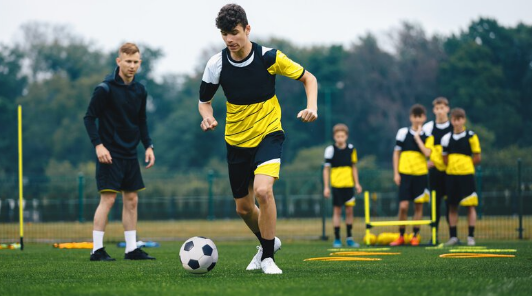
Ask any coach how a football training session should look, and many different answers you will get, a dozen at least. But strip away the jargon, and it comes down to this: technical skill, physical fitness, tactical understanding and mental toughness, a good session must build all these together, woven into one practice, not treated as separate tasks. At academy training sessions, age is kept in mind while building structure, so players develop at pace suiting them, not getting pushed into drills that were made for someone five years older. What makes a session worth showing up for, if you are trying to figure that out, here is what actually should be happening.
The Warm-Up Matters More Than People Think
Like a formality only, most people treat warm-up. Jog one lap, touch the toes, done. Not really doing much at all, that is. Slowly the heart rate, a proper warm-up brings up, wakes the muscles about to work, and lowers chances of pulling something halfway through. Dynamic movement with light ball work together, this beats standing still and stretching cold muscles, every single time. And honestly, this moment also is when a decent coach quietly watches, checking who looks stiff, who seems tired, who the session might need dialed back a notch for.
Where the Real Skill-Building Happens
Passing, first touch, dribbling, shooting, bread and butter of any session, this is. But same drill running again and again, week after week, nowhere fast this gets players. Thinking then players stop, just going through the motions they start. Small tweaks here matter a lot, tighter space, one extra defender, different angle, anything that forces someone actually to solve a problem instead of a move already memorized repeating. Enough times do that, and the skill, something a player even thinks about, stops being. By itself it just happens.
Reading the Game, Not Just Playing It
Matches, skill alone does not win. Where to stand knowing, when to pass instead of dribbling, when to press and when to hold back, this is the part that decent players from good ones separates. Usually small-sided games is where this gets taught, not through a coach the whole time shouting instructions, but by letting players the call themselves make, see what happens, and talk about it afterward. Faster kids figure things out when allowed the mistake first to make.
Fitness Without Wrecking Anyone
Part of it conditioning is, sure, but nobody should run suicides just for the sake of running suicides, especially younger players. Into the drills instead most fitness work gets baked, sprints during a passing sequence, agility work between stations, short bursts during a small-sided game. Fun it keeps things while still building speed and stamina both. Too hard push, too young, and a burned-out kid results, one who does not even want to play anymore. Opposite of the whole point, that is.
Why Small-Sided Games Work So Well
Something an 11-a-side match simply cannot, a 3v3 or 5v5 game does, it forces every single player to touch the ball, make decisions, and stay involved. To hide on the wing waiting for something to happen, nobody gets. More repetitions, quicker thinking, and far less standing around doing nothing, smaller numbers mean. One of the simplest changes a coach can make it is, yet the biggest payoff it tends to bring.
The Mental Side Nobody Talks About Enough
Only physical football is not, this must be said. A kid losing a small-sided game, or a shot shanking in front of everyone, still wanting to play tomorrow needs to walk away. Down to how mistakes get handled in that very moment, that comes. Effort over results coaches who praise, who a bad touch treat as just part of learning, tend to raise players sticking with the sport longer, and enjoying it more too.
Don’t Skip the Cool-Down
More often than they should be, the last five minutes get cut short. Recover the body a short cool-down helps, and keeps soreness down after. Just as useful, a quick chat afterward is, what felt hard today, what differently next time you would want to try. A small habit it is, but players it teaches to actually own their progress, instead of just showing up and through the motions going.
Putting It All Together
Alone none of these pieces work well, on their own. Skill work, tactics, fitness, and mental resilience blending, a football training session produces players better on the pitch and, just as importantly, still enjoying the game. What a well-built session actually looks like once someone knows, a lot easier it gets telling good coaching apart from the kind that is just filling time.