Across Australian industrial sites, every single year there are incidents where oil, fuel, or chemical liquids escape from their storage areas. The consequences from such incidents are not small — soil contamination happens, and EPA fines that are heavy follow. To stop exactly that from happening, spill containment solutions exist. These are the barriers, the drainage systems, and separation units that get built around liquid storage areas so hazardous substances cannot reach the ground or waterways. Over 35 years these systems have been delivered to industries across the country, and as environmental regulations have become tighter, the demand has only gone up.
What a Bund Is and Why It Gets Installed
Around storage tanks or industrial equipment, a bund is essentially a walled containment zone that gets constructed. If a pipe bursts or a tank leaks, the liquid that escapes has nowhere it can go except inside that contained area. There it will sit until someone can come and remove it safely and dispose of it the proper way.
In Australia, the EPA guidelines that exist around liquid storage are quite specific. At least 110% of the largest vessel it contains must be held by a bund. That extra 10% is not something arbitrary. For rainfall that collects inside the bund over time, that buffer accounts. If heavy rain hits a site and the bund is already full, that overflow becomes an environmental incident very quickly. So sizing is something that matters very much.
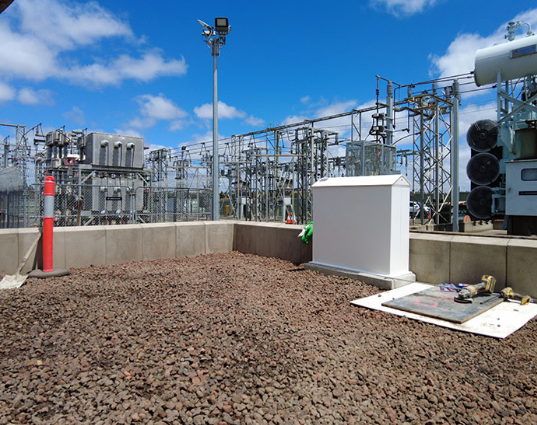
The materials used also carry importance. Over time, oil is corrosive. Standard concrete gets eaten through by certain chemicals. A bund that appears solid can develop micro-cracks in the floor that allow seepage — slow seepage — into the ground, and no visible sign of failure will show. That is the reason why chemical-resistant coatings and fire-rated wall systems are standard requirements on many industrial sites, especially those where transformer oil or petroleum products are being handled.
Stormwater Is a Bigger Problem Than Most People Expect
Rainwater gets collected by open bunds. On most sites, that is something unavoidable. The problem is that once rainwater mixes with even trace amounts of oil or chemical residue sitting inside the bund, the entire volume of it becomes contaminated. Into a stormwater drain that water cannot be discharged. Onto the ground it cannot be pumped. Treatment is what it needs first.
Oil-water separation systems are what solve this problem. Through a separation process, these units pull contaminated bund water and remove oil down to around 5 parts per million, and what remains is water clean enough that it can be discharged to approved outlets. On mains power some units run. Others are solar-powered, which makes them practical especially for remote agricultural or mining sites where grid power does not reach. Without this kind of system, manual removal of bund water by vacuum tanker is what sites end up doing — expensive and time-consuming, and it happens every single time it rains.
Temporary Bunding Handles Short-Term Risk
Permanent bunds are not always the answer that is right. For a few days or weeks — not decades — containment is what construction crews, maintenance teams, and project-based operations often need. Those situations are what temporary bunding is for. The units are modular, meaning around equipment they can be assembled quickly, repositioned when work moves somewhere else, and when the project ends they can be packed down.
During pipeline maintenance, transformer servicing, and infrastructure upgrades where heavy machinery and liquid storage are both present but only for a short time, this type of containment gets used regularly. Just because the work is short-term, the regulatory obligation to contain spills does not go away.
The Industries That Cannot Ignore Containment
Transformer oil in significant volumes gets stored by power utilities across substations. Daily, fuel and crude oil are handled by petrochemical facilities. Pesticides and herbicides that are lethal to aquatic ecosystems — even in small concentrations — are used by farms. From truck cleaning and ore processing, chemically contaminated wash water gets generated at mining sites. Different risk profiles are carried by each of these industries, which means across all of them a single containment design will not work. The substance, the volume, and how environmentally sensitive the surrounding area is — all of these things the system must match.
Testing Keeps Containment Systems Actually Working
A bund that five years ago was installed and since then never checked could right now be failing, and nobody would know. Pressurising the system to check for leaks, inspecting floor and wall integrity, verifying seal conditions, and confirming that drainage components are functioning correctly — all of this is what bund testing involves. Over time, UV exposure, freeze-thaw cycles, and chemical contact all degrade the materials.
If a site wants to stay compliant, maintenance is not optional. After an environmental incident, “we thought it was fine” is not something regulators will accept as a defence. The proof that a site has taken its obligations seriously is a documented testing history — and without that, the risk is very real.